
This Is How It’s Done
A short post

As a follow-up to my most recent post about the DOJ lawyer who claimed that her job sucked because of the pressure of handling multiple immigration habeas matters, while trying to get in touch with the right person at DHS to ensure compliance with court orders, I wanted to point out two recent cases where lawyers for the federal government did the right thing. It’s important to do this because the rule of law values I am constantly harping on here are not political or partisan in the red state/blue state sense. These should be principles that all lawyers can agree upon, regardless of party affiliation. We have some reason to hope this is the case, based on the actions of politically conservative lawyers who nevertheless refused to follow improper instructions from political superiors: Danielle Sassoon, Hagen Scotten, other lawyers in the SDNY, Denise Cheung in the D.D.C., Erez Reuveni, and apparently numerous lawyers in the Minnesota U.S. Attorney’s Office.
The lawyers in these recent two cases did not act heroically, but in a way that might be described as ordinarily ethical. But in the context of the administration’s relentless campaign to delegitimize restraints imposed by law and enforced by federal district courts, it’s refreshing to see cases of lawyers doing what they are supposed to. In a normal world no one would write about this – it would be business as usual. In the world of government lawyering in the second Trump administration, however, it’s worth shouting out lawyers who do the right thing.
Sorry, Your Honor, We Screwed Up
The matter of Gimenez Rivero v. Mina is proceeding in the Middle District of Florida, in Orlando. The district judge in the matter entered an order on a habeas corpus petition following the warrantless arrest and detention of a 15 year-old Venezuelan immigrant with a pending asylum application. The district court was, let’s say, rather skeptical of the government’s argument that the court lacked jurisdiction to consider the habeas petition because it is tantamount to a challenge to the decision to commence removal proceedings rather than to the detention. There are tons of case saying that § 1252(g) isn’t a general jurisdictional limit:
The Government’s argument to the contrary is, in a word, inexplicable. As a factual matter, challenging the decision to commence removal proceedings would have been a rather difficult thing for Gimenez Rivero to do in the Petition…given that removal proceedings were not actually commenced until days after he filed the Petition. As a legal matter, even if removal proceedings had already begun, this Court still has jurisdiction to consider the legal basis for his detention, based on decades-old precedent.
The court was also furious at the government for citing and discussing only one statutory basis for mandatory detention (which clearly doesn’t apply) and not the other section, which clearly has a right to a bond hearing – “seeking admission” is different from merely being present in the country. The Department of Homeland Security “had a longstanding practice of treating aliens already present in the country as detained under § 1226 and subject to bond hearings.” The Bureau of Immigration Appeals recently changed course, however, and determined that mandatory detention under § 1225 was now required. Amusingly, the district judge threw Loper-Bright back in the government’s face, quoting the Supreme Court’s language to the effect that courts, not administrative agencies, interpret statutes (pp. 9-10). The government’s argument was not frivolous, as shown by the recent Fifth Circuit decision in Buenrostro-Mendez v. Bondi, which held that someone in the position of Gimenez Rivero is subject to mandatory detention. There is now a circuit split developing on this issue and there is no 11th Circuit authority either way, so the government’s position was arguable. What pissed the district court off, however, was that the government lawyers pretended the law was all on their side (pp. 13-14):
If the Government is going to argue for expanding the interpretation of a law or maintain a widely rejected position to preserve its appellate rights, it may do so. But its lawyers must make those arguments in a way that comports with their professional obligations, as lawyers have done since time immemorial: Cite the contrary binding authority and argue why it’s wrong. Don’t hide the ball. Don’t ignore the overwhelming weight of persuasive authority as if it won’t be found. And don’t send a sacrificial lamb to stand before this Court with a fistful of cases that don’t apply and no cogent argument for why they should.
The court then ordered the U.S. Attorney for the M.D. Fla. and an AUSA to show cause why they should not be sanctioned, under Fed. R. Civ. P. 11 and the court’s inherent power, for their lack of candor.
Given the frequent snotty tone of defiance one encounters in government briefing these days, the response by the government lawyers to this show-cause order was refreshingly contrite. The response led off with an unusual “my bad” admission by the government:
Respondents acknowledge that, while the response to the petition for habeas corpus did not cite prior contrary district court decisions, this oversight was unintentional, was not from a lack of candor, and will not reoccur.
It is gratifying to see that these lawyers have at least learned the basic lesson that, when you get chewed out by a federal judge, the ONLY permissible response is an abject apology. The lawyers also did a pretty decent job of pitching as an explanation, but not an excuse, the intense workload pressure their office is under:
[W]e also ask that the Court understand the challenging context in which this particular case and filing arose. The Middle District of Florida is currently experiencing an unprecedented onslaught of habeas corpus petitions. In a typical year, this District sees 150 to 180 civil immigration cases of all kinds. This year we are on track to receive perhaps ten times that number. . . . [W]e are short staffed in the Orlando Civil Division, which exacerbates our ability to confront this challenging docket. That is obviously not the Court’s concern, and we offer it neither as a defense nor justification to what has concerned the Court. On the other hand, it is certainly a factor to consider as the Court considers sanctions, insofar as it paints a picture of an extremely challenging (indeed, unprecedented) environment for civil AUSAs to operate in.
This is what Julie Le should have said at the hearing, emphasizing that, while we’re dealing with an onslaught of habeas petitions and are short staffed, this is in no way an excuse. But it does show that our actions were not in bad faith. Notably, the lawyers here were acting in an advocacy role but didn’t try to excuse their conduct as an instance of “zealous advocacy.”
Reasonable Remedial Measures
There has been a lot of reporting on a motion filed by the Minnesota U.S. Attorney’s Office to dismiss with prejudice the charges against two men accused of assaulting an ICE agent. The head of the office filed a one page motion, stating:
Newly discovered evidence in this matter is materially inconsistent with the allegations in the Complaint Affidavit, filed on January 16, 2026, as ECF 1-1, as well as the preliminary-hearing testimony (ECF 18, 19) that was based on information presented to the Affiant [FBI agent Timothy G. Schanz].
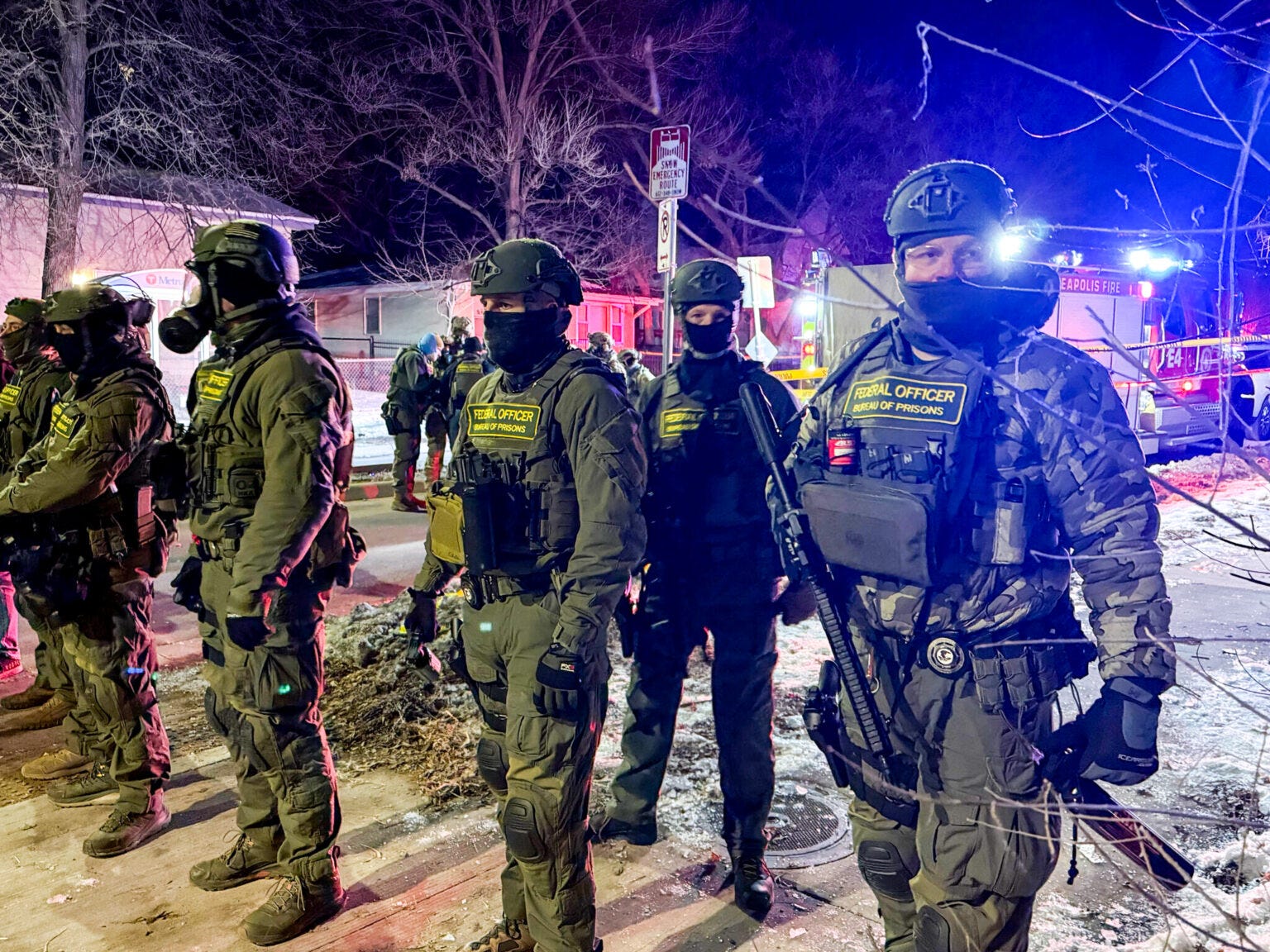
At the time of the incident, DHS Secretary Kristi Noem described the actions of the men as an attempted murder of a federal law enforcement officer, and other accounts described them as “violent agitators” who attacked the ICE agents with a shovel and broom. Apparently the story started to unravel pretty quickly. Now, however, the acting director of ICE says:
“Video evidence has revealed that sworn testimony provided by two separate officers appears to have made untruthful statements,” Mr. Lyons said. “Both officers have been immediately placed on administrative leave pending the completion of a thorough internal investigation.”
Rule 3.3(a)(3) of the Minnesota Rules of Professional Conduct prescribes the duties of a lawyer in this situation:
A lawyer shall not knowingly . . . offer evidence that the lawyer knows to be false. If a lawyer, the lawyer’s client, or a witness called by the lawyer has offered material evidence and the lawyer comes to know of its falsity, the lawyer shall take reasonable remedial measures, including, if necessary, disclosure to the tribunal.
The evidence offered, in this case, was the affidavit of FBI Agent Schantz, who testified that he had been told a story by an ICE officer of being hit with a broomstick and snow shovel, lying “exhausted, alone, on the ground, and in fear of his safety,” and then firing his pistol in self-defense.
The FBI agent’s affidavit was, in all likelihood, drafted by a prosecutor, but it doesn’t matter; as soon as a lawyer “comes to know” of the falsity of evidence offered to a tribunal – including to a magistrate judge in support of a criminal complaint – the lawyer must take reasonable remedial measures. Comment [10] to Rule 3.3 explains the sequence of events:
Having offered material evidence in the belief that it was true, a lawyer may subsequently come to know that the evidence is false. Or, a lawyer may be surprised when the lawyer’s client, or another witness called by the lawyer, offers testimony the lawyer knows to be false, either during the lawyer’s direct examination or in response to cross-examination by the opposing lawyer. In such situations or if the lawyer knows of the falsity of testimony elicited from the client during a deposition, the lawyer must take reasonable remedial measures. In such situations, the advocate’s proper course is to remonstrate with the client confidentially, advise the client of the lawyer’s duty of candor to the tribunal and seek the client’s cooperation with respect to the withdrawal or correction of the false statements or evidence. If that fails, the advocate must take further remedial action. If withdrawal from the representation is not permitted or will not undo the effect of the false evidence, the advocate must make such disclosure to the tribunal as is reasonably necessary to remedy the situation, even if doing so requires the lawyer to reveal information that otherwise would be protected by Rule 1.6. It is for the tribunal then to determine what should be done - making a statement about the matter to the trier of fact, ordering a mistrial or perhaps nothing.
We don’t know how the prosecutors came to know the story told by the ICE officers was false, whether U.S. Attorney Daniel Rosen or a lawyer in his office first “remonstrated with” the ICE officers in order to persuade them to change their testimony, or attempted to persuade FBI Agent Schatz to withdraw his affidavit. In this case, however, I don’t think it matters, because the point of the “remedial measures” duty is – as the comment clearly states – to “undo the effect of the false evidence.” The effect was the issuance of a criminal complaint, and the obligation of the U.S. Attorney’s Office was to undo the effect of that complaint.
If the prosecutors had other credible evidence available to support the prosecution, they might have chosen to dismiss without prejudice. The dismissal with prejudice is a clear signal that their case had fallen apart completely when it became apparent that the ICE agents were lying.
It’s worth keeping an eye on these two stories to see if these lawyers are fired or reassigned by senior officials in the Justice Department. Given the treatment of Erez Reuveni, I wouldn’t be surprised if Pam Bondi and Todd Blanche see compliance with clear duties in the rules of professional conduct as punishable failures of zealous advocacy. That would be an infuriating outcome, but far from the most outrageous thing this administration has done.
Your February 11 and 13 entries should be required reading for all third-year law students.
Thank you for the follow-up post. I was indeed left with questions about how Special AUSA Julie Le should have handled the situation. The problem is that acting according to the rules that bind lawyers becomes challenging—if not impossible—during a time when the government you work for is not upholding those same rules. No matter how well-intentioned they may be, lawyers cannot solve the root problem of a government that does not respect the law. To me, the solution lies in the hands of the public, who need to take to the streets and protest continuously