
Teaching Legal Ethics

I gave a talk a little while ago on the litigation over the Trump administration executive orders aimed at law firms. The talk was open to the public, and afterwards someone came up to me and was hopping mad. Not because I had criticized the administration or suggested the EOs were thuggish and authoritarian, but because I was a law professor, and legal education had self-evidently failed to inculcate the correct ethical knowledge, values, or dispositions in Pam Bondi, Chad Mizelle, Todd Blanche, and other lawyers involved in the whole sorry episode.
After muttering something about how I didn’t personally train these lawyers, I asked, somewhat incredulously, what this critic of legal education would have us do differently. Not just me, with my survey Professional Responsibility class, but legal education more generally. Should PR be in the first year? Should it be taught by the pervasive method? Should it be integrated into clinics and other experiential learning? I know, everyone says it should be about “more than the rules,” as if all we’re doing is preparing students for the MPRE. Beyond the rules, though, is the whole field of the law governing lawyers, which is pretty complicated, and can eat up most of a 3-credit class. What should we do differently?
It was clear from the interaction, though, that the audience member’s complaint was not about the content of PR classes but about the efficacy of the currently employed methods of legal ethics education. Whatever we’re doing, it’s not working. Just look at what these lawyers in the administration are doing! I tried to push back gently by pointing out the former government lawyers who either resigned or were fired because they refused to go along with the demands of Trump or senior administration officials. Danielle Sassoon, Erez Reuveni, and Erik Siebert should be part of this conversation, too.
The interaction struck me as funny because it’s much more familiar in the other direction: the “woke indoctrination” critique of higher education that Christopher Rufo and so many other right-wing activists have been going on about recently, but which has been a part of the right’s thinking about higher education for as long as I can remember. The familiar claim is that somehow we’re turning students into a bunch of America-hating Marxist-Leninists. A recent memo from Pam Bondi on domestic terrorism lays out the substantive content of the beliefs we’re supposedly indoctrinating students into:
. . . political and social agendas, including opposition to law and immigration enforcement; extreme views in favor of mass migration and open borders; adherence to radical gender ideology, anti-Americanism, anti-capitalism, or anti-Christianity; support for the overthrow of the United States Government; hostility towards traditional views on family, religion, and morality . . ..
Then throw in critical race theory and other “divisive concepts” and the usual claim is that somehow we in legal education are capable of influencing our students so decisively that they graduate as wannabe members of the in-house counsel’s office for antifa.
We who labor in the vineyards of legal education tend to be surprised to learn that we have the power to compel our students to believe anything at all. (See, e.g., this very funny article from Above the Law by an anonymous law professor.) Professors often make a joke along the lines of, “how can I indoctrinate students? I can’t even get them to read the damn syllabus.” As a small, nerdy aside, I’m obsessed with getting my PR students to understand the difference between the attorney-client evidentiary privilege, which can be asserted in opposition to an attempt to compel disclosure of information, and the rule of confidentiality, which states a duty to one’s client, but which cannot be asserted as the basis for an objection to a subpoena, deposition question, etc. We talk about this issue easily a dozen different times in class, I tell them I’m going to ask a question about it on the exam, and yet every year about 1/3 of students get that question wrong. I just got back my final exam results and, sure enough, the difficulty measure for that question was 0.67. If I could indoctrinate, believe me, my first priority would be the privilege/confidentiality distinction.
Obviously there’s a very large gap between the information we attempt to convey by standing in front of the room yammering at students and the causal determinants of ethical or unethical behavior. Moral education is an ancient problem. Aristotle talks about it in the Nicomachean Ethics, arguing that, while some think that people are made good through teaching, “the soul of the student must first have been cultivated by means of habits for noble joy and noble hatred, like earth which is to nourish the seed” (EN, X.9). Behavior is a product of many things, including beliefs, desires, dispositions, attitudes, and values, many of which seem difficult to affect in adult learners by someone who sees students for only a few hours a week. To say nothing of the fact that all the legal educators put together interact with students for a much smaller fraction of their legal career than the employers for whom they go to work following graduation. The “habits for noble joy and noble hatred” which are necessary for ethical education seem far more likely to cultivated by post-graduate employment.
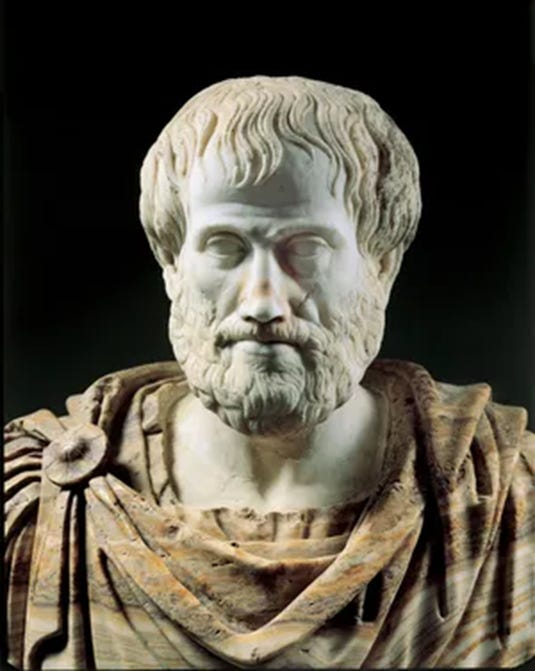
[At some point an ethics blog needs a picture of Aristotle.]
Maybe we can make some progress by looking for a clear sense of what ethics, or ethical reasoning, is. Is it about knowing stuff, doing the right thing, or being a particular kind of person? Depending on the answer, different institutional responses to perceived unethical conduct by lawyers would be called for.
Three traditional contenders are:
(1) Propositional knowledge (knowing that).
A lot of practical or professional ethics courses outside of law begin with a little tour through the noteworthy thinkers and positions that have been held in (mostly Western) moral philosophy. Start with Socrates and Aristotle, then jump forward almost 2000 years for a bit of utilitarianism, then contrast it with deontological reasoning (mentioning Kant but not getting too technical with the different versions of the Categorical Imperative and things like that, and oh Lord, to we really have to talk about the Trolley Problem?), maybe a mention of David Hume and Adam Smith, and then sometimes ending with contemporary philosophers like T.M. Scanlon or Bernard Williams. If you’ve seen The Good Place, you get the picture.
There’s nothing wrong with a class that seeks to impart information about some subject. Lawyers really do have to know a bit about the rules of professional conduct and other aspects of the law governing lawyers. One reason, I believe, that the term “legal ethics” has stuck to the rules and law governing lawyers is that teaching law is familiar – we know how to do it, and so we reassure ourselves that we can teach ethics, too. But as soon as it is admitted – as I think has to be – that being an ethical lawyer consists of more than just knowing the applicable law, we’ve encountered the limits of this approach.
As is well known, a course in legal ethics or professional responsibility became compulsory in U.S. law schools following the Watergate scandal, by action of the American Bar Association. Given the number of lawyers who were involved in covering up the break-in to the Democratic Party’s headquarters, I can understand the ABA’s motivation: We should look like we’re doing something about those bad lawyers! But a lot is riding on the assumption that the lawyers assisting in the cover-up acted as they did because they didn’t know enough about law or ethics. Nixon’s former White House Counsel John Dean, however, was perfectly clear that he knew what he was doing was wrong:
“I knew enough of the criminal law to know this is either extortion or bribery. Now, my reaction is kind of interesting. I had just gotten married and I said, ‘Holy cow, we’re in trouble!’ So I decided then I’ve got to make the cover-up work and that’s when I dove in with both feet. It was foolish.”
Speaking as someone who loves the subject of the law of lawyering, I can’t say my response to John Dean’s admission would have been, we need to teach more about law and the rules of professional conduct to lawyers. Don’t get me wrong – it’s important that students learn these principles – but that’s a long way from affecting the behavior of lawyers in practice.
(2) Expertise or competency (knowing how).
A friend of mine I saw recently at a conference reminded me of the critique of the idea of ethics as being concerned with judgment and justification. In “Towards a Phenomenology of Ethical Expertise,” Hubert and Stuart Dreyfus contend:
Granted that one aspect of the moral life and most of moral philosophy has been concerned with choice, responsibility, and justification, we should, nonetheless, take seriously . . . that most of our everyday ethical comportment consists in unreflective, egoless, responses to the current interpersonal situation.
On their view, moral education is similar to acquiring a skill like driving a stick-shift car. One begins as a novice, following a set of decomposed rules and procedures, and proceeds through more advanced stages of perceiving a situation more holistically (e.g. not staring at the tachometer to know when to shift but feeling it’s the right time), and finally proceeding based on largely tacit competencies that run in the background while the actor is freed up to act on higher-order plans or intentions.
This view is perhaps more familiar nowadays from the work of Jonathan Haidt in moral psychology, which is based on the extremely influential foundational work of Kahneman and Tversky. Haidt first attracted attention with a series of ingenious experiments which demonstrated that individuals’ moral judgment is very often driven by deep, subconscious, highly emotionally-laded factors such as disgust, and were not the product of conscious rational deliberation. When asked, what’s wrong with eating the family dog, burning a flag, or having a consensual incestuous relationship, experimental subjects struggled to get beyond “eewww.” They tried to come up with reasons supporting their conclusions, but one of Haidt’s findings was that these are rationalizations as opposed to reasons. Causally, moral judgments are determined by non-rational factors.
I teach Haidt’s work in my business ethics course,1 along with other recent social science research on “bounded ethicality.” Some of the themes of that literature include:
Many departures from ideals of rationality or ethical decisionmaking are largely unconscious. They are the result of automatic processes that reduce the effort and friction of cognition. We are more likely to fall into automatic decisionmaking processes when we are under cognitive load, resulting for example from being rushed or tired.
These departures from ideal reasoning processes are systematic and not random. It is possible to predict with considerable reliability the ways in which people will fail to be ideally rational or ethical.
Conscious judgment often follows on, or is unconsciously affected by, intuitive responses which are laden with emotion.
Judgment requires full information, which assumes that people are perceiving all the relevant facts. As the famous invisible gorilla experiment shows, perception requires that we be paying attention to the thing we need to see.
Studies show that people tend to rate themselves as more ethical than the average person. It is well established in psychology that we are all prone to the Lake Woebegone effect, named for Garrison Keillor’s fictional town where all the children are above average. While the Lake Woebegone effect is pervasive (we all think we’re better drivers or cooks than we actually are), it is particularly important in ethics given the connection between values such as honesty, loyalty, and trustworthiness to our sense of self. The reason this is a powerful explanation for wrongdoing is that it’s easy for a decision to get started in an automatic, unconscious, emotion-laden process. We then look back in time at the decision, which again may have been made without any real conscious thought involved, and have to reconcile it with our self-conception as an ethical person. We’re generally clever enough to be able to come up with some explanation that is consistent with our self-image as honest, kind, trustworthy, loyal, caring, and so on. When we engage in reasoning about actions we have already taken, possibly in response to unconscious, automatic processes, we are not acting like a philosopher looking to determine what is the right thing to do. Instead we are acting like a lawyer or public-relations agent, trying to cast the action in its best light, as viewed by others. The evidence from psychology is that the reasons we come up with are largely post hoc explanations of decisions that were made on the basis of unconscious factors.
(3) Character traits or dispositions (being virtuous).
The most ambitious version of the critique of legal ethics education is that we should be doing more to form the character of our graduates. The first, and most obvious, objection to this proposal is that we lack the expertise and opportunity to affect the values, attitudes, and dispositions of our students – those things we shorthand with the label of moral character. But there’s another objection: It’s not clear that character is the most important factor in determining people’s actions.
In one of my all-time favorite social psychology experiments, the researchers, John Darley and Daniel Batson, wanted to understand what causes people to engage in helping or pro-social behavior. The subjects were students at Princeton Theological Seminary, studying to become ministers, so presumably already pretty committed to pro-social behavior. They were told to record a 3-5 minute talk responding to one of two topic prompts. The first was a bland question about the importance of seminary education to a career in ministry. The second topic was based on the parable of the Good Samaritan, which in Christian religious thought illustrates, among other things, the importance of helping those in need and the wide scope of care for one’s neighbor. The subjects were also told that, due to space limitations, they had to go to another building to record their talk.
Unknown to the subjects, they had been further divided into subgroups – some of whom were told they had plenty of time to get to the other building, and others who were told “Oh, you’re late – they were expecting you a few minutes ago. The assistant should be waiting for you so you’d better hurry.” In each case, on their way to the other building the subjects passed a person sitting slumped in a doorway, not moving, apparently in distress. This was, of course, a confederate of the experimenters. The dependent variable was whether the subject attempted to help the victim.

What do you predict would be the outcome? From an ordinary or folk psychology point of view, you’d expect it to be more likely that someone would stop and help the person in distress if they had just been thinking about the parable of the Good Samaritan, with its message of helping others in distress, even if they are outsiders to your religious community. Moreover, our folk psychology assumes that an important determinant of behavior is a person’s character. These subjects were studying to join a helping profession, so surely they must the kind of people who would stop and render aid – right? But the traits of character, as revealed through questionnaires taken by the subjects at the beginning of the experiment, had no connection with willingness to help. Neither did the assignment to think about the parable of the Good Samaritan. What made a lot of difference, however, is whether the participants were told that they were in a hurry. 63% who were told they had plenty of time stopped to help, as compared with only 10% who were told they were late. The apparently trivial situational factor of being in a hurry turned out to be much more important in determining behavior than one’s religious vocation or recent contemplation of a story about helping behavior.
The takeaway from the Good Samaritan experiment is not that character is irrelevant, but that sometimes subtle situational factors can overwhelm character traits in some situations. Similarly, Jonathan Haidt’s work does not show that principles, reasoning, and justification is irrelevant, only that it often follows in the wake of snap decisions made on the basis of unconscious factors. The upshot for ethics, therefore, is not so much about ethics education as it is the design and regulation of systems and procedures to ensure that people have sufficient opportunity to make and act on good decisions - counteracting the effects listed in the bullet points above. There is considerable evidence from other fields, such as commercial aviation, that trying to improve human performance is far less effective than improving systems.
At least that’s what I teach in my business ethics course. And yet, and yet . . . I think there is something to the idea of character. I realize I may simply be in the grip of a powerful illusion, which is what folk psychology is. But I can’t let go of the finding that some otherwise ideologically aligned lawyers have incurred significant career consequences for their refusal to act unethically. I wrote a paper about the good lawyers of January 6, who refused to go along with John Eastman’s cockamamie scheme to have Mike Pence refuse to certify the election results, and I’ve written several times on here about lawyers like Sassoon and Reuveni who have been ousted from this administration for standing their ground based on the value of the rule of law.
I’m genuinely unsure how to understand this, in light of all that I’ve read in the literature on moral psychology, but it seems very important to get this right. More pragmatically, the ABA is now requiring law schools to provide opportunities within the curriculum for students to develop a professional identity. An interpretive comment explains that “professional identity focuses on what it means to be a lawyer and the special obligations lawyers have to their clients and society.” That sounds a lot like legal ethics to me, and it feels like we’re going to have the whole debate about teaching ethics all over again, only in the form professional identity development. Old wine, new bottles (two Biblical allusions in one Substack - a new record). If the social psychologists from Kahneman and Tversky to Haidt to Darley and Batson are right that character is an illusion of folk psychology, then I’m not sure what legal education can do on the professional identity front, any more than in teaching legal ethics. But I’d love to be wrong about this.
If you teach legal ethics and are tired of people making jokes like “heh, that’s an oxymoron,” you should try telling people you teach business ethics. “Short class?” is the kindest thing I’ve heard recently in response.